




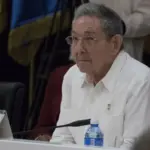
Former Cuban leader Raúl Castro and five others have been indicted in the United States over the 1996 downing of two civilian aircrafts operated by the exile group Brothers to the Rescue, an attack that killed four Cuban Americans.
The charges, announced Wednesday by the Justice Department, accuse the 94-year-old former Cuban president and longtime defense chief of conspiracy to kill U.S. nationals, murder, and destruction of aircraft. Castro, the younger brother of late Cuban revolutionary leader Fidel Castro, served as Cuba’s president from 2008 to 2018 and remained head of the Communist Party until 2021.
The indictment was unveiled in Miami during a press conference held at Freedom Tower, a landmark closely tied to the Cuban American community. The announcement came on May 20, recognized by many Cubans as Cuban Independence Day, and drew cheers from attendees.
The case centers on the Feb. 24, 1996, shootdown of two small Cessna planes flying missions for Brothers to the Rescue, an organization founded by Cuban exile pilot José Basulto. The group searched for Cubans attempting to flee the island by raft between Cuba and Florida. According to U.S. officials and international investigators, the aircraft were destroyed by a Cuban MiG-29 fighter jet while flying in international airspace. The four victims — Armando Alejandre, Carlos Alberto Costa, Mario Manuel de la Peña and Pablo Morales — included three U.S. citizens and one legal permanent resident. The incident triggered widespread international condemnation at the time. Then-President Bill Clinton denounced the attack “in the strongest possible terms,” while Congress responded by tightening sanctions on Cuba.
Investigations by the International Civil Aviation Organization and the Inter-American Commission on Human Rights concluded that Cuban authorities failed to follow standard interception procedures before opening fire. Cuba has long denied wrongdoing, insisting the planes had entered Cuban airspace and accusing the group of provocative actions, including leaflet drops over the island.
Whether Castro will ever face trial remains uncertain because Cuba does not extradite its citizens to the United States. Still, the indictment represents another escalation in tensions between Washington and Havana under the administration of Donald Trump. In recent months, the White House has increased pressure on Cuba through sanctions and threats aimed at forcing political and economic reforms. The administration also moved to cut off Venezuelan oil shipments to the island after the capture of former Venezuelan leader Nicolás Maduro, contributing to worsening fuel shortages and widespread blackouts across Cuba.
Editorial credit: Golden Brown / Shutterstock.com